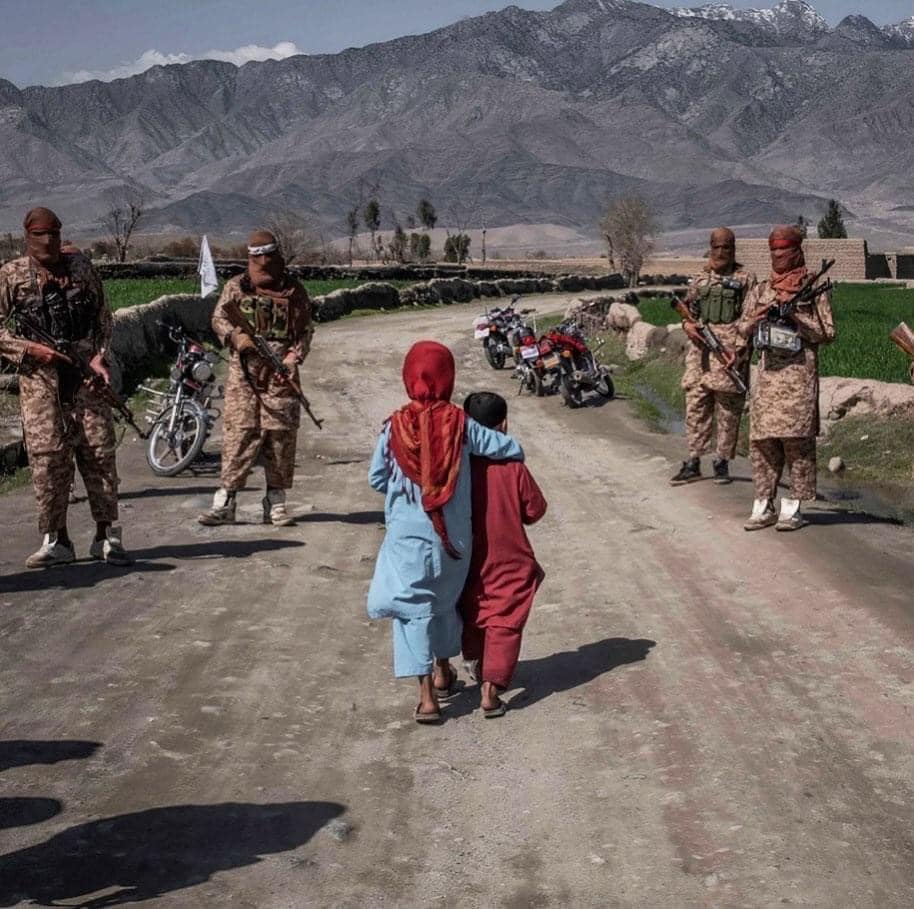
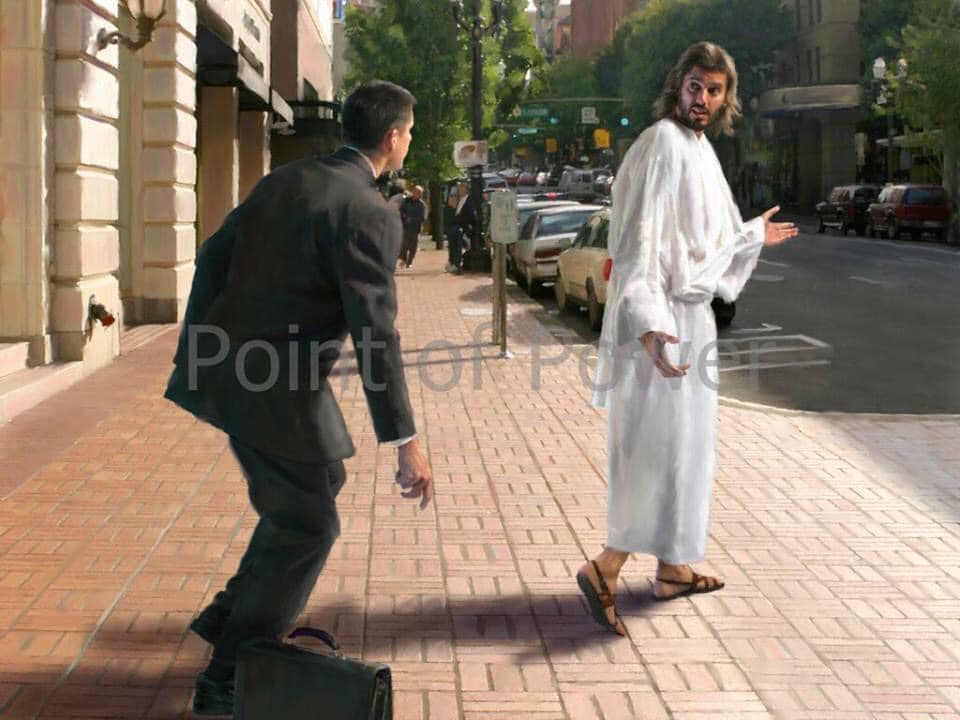
The “Underground Church” in Kabul, Afghanistan is now at home with the Lord.
“We received news that the underground church in Kabul Afghanistan has been martyred. “
Our friends have been in contact and met together last night in deep prayer. The last words she spoke were, “We feel your prayers because this supernatural boldness came over us and we were singing in the Spirit.
Even the kids said mom we will not deny Jesus.” As they were on the phone they heard screaming and gun shots. God is so powerful they went to be with the Creator filled with joy.
I didn’t think that the hesitation in my car engine and that little yellow “check engine” light on my dashboard really needed my immediate attention.
I sang it away, saying that I would get to it tomorrow. However, the next morning when I turned the key to start my car, it wouldn’t start.
My first reaction was frustration, knowing that this would mean money, time, and inconvenience. My second thought was more of a resolution: I need to pay attention to warning lights that are trying to get my attention — “they can mean something is wrong.”
God used the prophet Joel to encourage His people to “pay attention to the warning light on their spiritual dashboard”. Prosperity had caused them to become complacent and negligent in their commitment to the Lord.
Their faith had degenerated into empty formalism and their lives into moral bankruptcy. So God sent a locust plague to ruin crops in order to get His people’s attention, causing them to change their behavior and turn to Him with their whole heart.
What warning lights are flashing in your life ? What needs to be tuned up or repaired through confession and repentance ? And remember repentance is something that is always to be carried out now. – Marvin Williams
When I tried to cover my sin, my guilt I could not shake; But when I sought Your mercy, Lord, my sin I did forsake. — Hess “Conviction is God’s warning light.”
16 Therefore we do not lose heart. Though outwardly we are wasting away, yet inwardly we are being renewed day by day. 17 For our light and momentary troubles are achieving for us an eternal glory that far outweighs them all.
18 So we fix our eyes not on what is seen, but on what is unseen, since what is seen is temporary, but what is unseen is eternal.
Awaiting the New Body
5 For we know that if the earthly tent we live in is destroyed, we have a building from God, an eternal house in heaven, not built by human hands.
2 Meanwhile we groan, longing to be clothed instead with our heavenly dwelling, 3 because when we are clothed, we will not be found naked.
4 For while we are in this tent, we groan and are burdened, because we do not wish to be unclothed but to be clothed instead with our heavenly dwelling, so that what is mortal may be swallowed up by life.
5 Now the one who has fashioned us for this very purpose is God, who has given us the Spirit as a deposit, guaranteeing what is to come.
6 Therefore we are always confident and know that as long as we are at home in the body we are away from the Lord. 7 For we live by faith, not by sight.
8 We are confident, I say, and would prefer to be away from the body and at home with the Lord. 9 So we make it our goal to please him, whether we are at home in the body or away from it.
10 For we must all appear before the judgment seat of Christ, so that each of us may receive what is due us for the things done while in the body, whether good or bad.
“Before I was afflicted I went astray, but now I keep Your word. It is good for me that I have been afflicted, that I may learn Your statutes.”(Psalm 119:67, 71 NKJV)
This actually happened years ago. It was in 1968 on an airplane headed for New York — a routine and normally very boring flight. But this time it proved to be otherwise.
As they were on their descent pattern, the pilot realized that the landing gear was not engaging. He messed around with the controls, trying again and again to get the gear to lock into place…without success.
He then asked ground control for instruction. As the plane circled the landing field, the emergency crew coated the runway with foam and fire trucks and other emergency vehicles moved into position.
Meanwhile, the passengers were told of each maneuver in that calm, unemotional voice pilots do so well. Flight attendants glided about the cabin with an air of cool reserve. Passengers were told to place their heads between their knees and grab their ankles just before impact.
There were tears and a few cries of despair. It was one of those “I can’t believe this is happening to me” experiences. Then, with the landing only minutes away, the pilot suddenly announced over the intercom: “We are beginning our final descent.
At this moment, in accordance with International Aviation Codes established at Geneva, it is my obligation to inform you that if you believe in God you should commence prayer.”
Scout’s honor…that’s exactly what he said! I’m happy to report that the belly landing occurred without a hitch. No one was injured and, aside from some rather extensive damage to the plane, the airline hardly remembered the incident.
In fact, a relative of one of the passengers called the airline the very next day and asked about that prayer rule the pilot had quoted. The answer was a cool, reserved “No comment.” Amazing.
The only thing that brought out into the open a deep-down “secret rule” was crisis. Pushed to the brink, back to the wall, right up to the wire, all escape routes closed…only then does our society crack open a hint of recognition that God may be there and — “if you believe…you should commence prayer.”
Reminds me of a dialogue I heard on the tube shortly after Mount St. Helens erupted. The guy being interviewed was a reporter who had “come back alive” from the volcano with pictures and sound track of his own personal nightmare.
He was up near the mouth of that mama when she blew her top, and he literally ran for his life…with camera rolling and the mike on. The pictures were blurred and dark, but his voice was something else.
It was eerie, almost too personal to be disclosed. He breathed deeply, sobbed, panted, and spoke directly to God. No formality, no clichés — just the despairing cry of a creature in crisis.
Things like, “Oh, God, oh, my God…help! Help!” More sobbing, more rapid breathing, spitting, gagging, coughing, panting. “It’s so hot, so dark…help me, God! Please, please, please, please….”There’s nothing like crisis to expose the otherwise hidden truth of the soul.
Any soul. We may mask it, ignore it, pass it off with cool sophistication and intellectual denial…but take away the cushion of comfort, remove the shield of safety, interject the threat of death without the presence of people to take the panic out of the moment, and it’s fairly certain most in the ranks of humanity “commence prayer.”
Crisis crushes. And in crushing, it often refines and purifies. I’ve stood beside too many of the dying, ministered to too many of the victims of calamity, listened to too many of the broken and bruised to believe otherwise.
Unfortunately, it usually takes such brutal blows of affliction to soften and penetrate hard hearts. Remember Alexander Solzhenitsyn’s [1] admission? “Bless you prison, bless you for being in my life.
For there, lying upon the rotting prison straw, I came to realize that the object of life is not prosperity as we are made to believe, but the maturity of the human soul.” ― Aleksandr I. Solzhenitsyn, The Gulag Archipelago 1918-1956
Those words provide a perfect illustration of the psalmist’s instruction: “Before I was afflicted I went astray, but now I obey Your word….It was good for me to be afflicted so that I might learn Your decrees.” (Psalm 119:67, 71 )
After crisis crushes, God steps in to comfort and teach. This actually happens somewhere in our world every day.—Chuck Swindoll Taken from Charles R. Swindoll, “Commence Prayer,” in The Finishing Touch:
Becoming God’s Masterpiece (Dallas: Word, 1994), 550-52.Ref 1: Aleksandr Isayevich Solzhenitsyn [1] Russian: Алекса́ндр Иса́евич Солжени́цын, December 11, 1918 – August 3, 2008) [2] was a writer, who, through his often-suppressed writings, helped to raise global awareness of the gulag, the Soviet Union’s forced labor camp system – particularly in ‘The Gulag Archipelago’ and ‘One Day in the Life of Ivan Denisovich’, two of his best-known works.
Solzhenitsyn was awarded the Nobel Prize in Literature in 1970. He was expelled from the Soviet Union in 1974 but returned to Russia in 1994 after the Soviet system had collapsed.
If you don’t think there are any heroes who took action to save lives right before the Afghanistan debacle, think again.
An Oklahoma mother of 11 took it upon herself to rescue 10 members of Afghanistan’s all-girls robotics team. She flew to Qatar earlier this month to try to get some of the girls to safety before the Taliban surprised the Biden administration by swiftly taking over the entire war-torn country.
What’s even more amazing is Allison Reneau is hoping to save even more girls before the Taliban, known for their brutal treatment of women and religious minorities, have free rein to implement totalitarian Islamic sharia law.
NBC News reports Reneau, a 60-year-old Harvard graduate, took it upon herself to try and save members of the girls’ robotic team.
She had been in touch with the team of girls ages 16 to 18 since meeting them as a board member for Explore Mars at the organization’s annual Humans to Mars conference in 2019. The team had been recognized as the future of Afghanistan and was an example of how far women’s rights had come since the U.S. liberation following the 9/11 terror attacks on New York City and Washington, D.C.
Reneau told NBC News she “couldn’t shake” the feeling that the girls were in danger while watching the news of the advancing insurgent army in early August. She called Sen. Jim Inhofe (R-OK), a ranking member of the Armed Services Committee, but that “lead went cold” when the senator became “overwhelmed with the need to help our American citizens.”
Deciding to try by herself, she got on an airplane headed to the Middle East where she landed in Qatar, which is still thousands of miles away from Afghanistan. But she had a friend that could help.
“I remembered my former roommate in D.C. a couple of years ago was transferred to Qatar,” she explained. “She worked in the U.S. Embassy in Qatar… she was sure her boss would approve helping the girls.”
“She wrote up a request, and I got all of their passports together,” Reneau said. “She went back to the Embassy at midnight and worked all night to prepare the documents and packets for the girls.”
“It’s a very narrow window of opportunity,” she told NBC News. “I knew that if I didn’t run through that door now — it’s now or never. Sometimes you only get one chance.”
Thankfully, all 10 girls were able to make it to the American-held side of Kabul’s airport and boarded a plane.
“Several members of the girls’ Afghan robotics team have safely arrived in Doha, Qatar, from Kabul, Afghanistan,” a statement from the Digital Citizen Fund (DCF) and Qatar Ministry of Foreign Affairs said on Thursday.
The girls were taken to a secure location and will continue to pursue higher education.
Elizabeth Schaeffer Brown, a board member on the DCF told NBC News, “Ultimately the girls ‘rescued’ themselves. If it were not for their hard work and courage to pursue an education, which brought them in contact with the world, they would still be trapped. We need to continue to support them and others like them.”
2 This is how you can recognize the Spirit of God: Every spirit that acknowledges that Jesus Christ has come in the flesh is from God,
3 but every spirit that does not acknowledge Jesus is not from God. This is the spirit of the antichrist, which you have heard is coming and even now is already in the world.
1 John 4:13-17 NIV
13 This is how we know that we live in him and he in us: He has given us of his Spirit. 14 And we have seen and testify that the Father has sent his Son to be the Savior of the world.
15 If anyone acknowledges that Jesus is the Son of God, God lives in them and they in God. 16 And so we know and rely on the love God has for us.
God is love. Whoever lives in love lives in God, and God in them.
17 This is how love is made complete among us so that we will have confidence on the day of judgment: In this world we are like Jesus.
1 John 5:4-5 NIV
4 for everyone born of God overcomes the world. This is the victory that has overcome the world, even our faith.
5 Who is it that overcomes the world? Only the one who believes that Jesus is the Son of God.
JAY SHETTY: WISDOM OF THE WORLD By Marcia Montenegro
You may have seen videos on YouTube of Jay Shetty, a popular self-help guru whose videos are even posted by Christians. But be aware that within his witty admonitions are kernels of New Age, Hindu, and Buddhist spiritual views.
Former Monk
Shetty at one time was a monk on “the Hindu Vedic path” (source, interview with National Geographic at https://bit.ly/2BLUQE6). All descriptions I came across describe him simply as a “former monk,” not specifying the spiritual tradition. This way, some may think he was a Catholic, Buddhist, Hindu, or other type of monk, making him appealing to every religious background.
Videos
If you listen carefully to some of his videos, you can catch the spiritual beliefs behind them. One video on Visualization is at https://bit.ly/2NghXYz. This is not about focus or imagination, but rather visualizing something in order to make it happen.
This type of visualization is intrinsic to the New Age and the occult – found in all areas of those two fields, especially in sorcery. Why sorcery? Because the principle behind this is that you have the power of your will to alter reality and/or to manifest something into reality.
New Agers believe this is done with thoughts and words, since you have a divine nature; and the occult does it with spells, incantations, or magical rituals. In another video, Shetty states this:
“When asked what the biggest mistake we make is, the Buddha replied: “The biggest mistake is you think you have time.” From video “Don’t waste your time” at https://bit.ly/2KPF4IH
CANA: Shetty continues on how we should not waste time, breaking time down into how much time we spend sleeping, grooming, working, on social media, doing chores, eating, etc.
First of all, there is no way to authenticate that Buddha said this: Buddha’s teachings were not written down until about 500 years after his death. Secondly, if Buddha did say it, what he meant is that there is no time because there is no self, no mind, no universe, etc.; there is only formlessness, which is the true nature of reality. So of course, he did not believe in time (this view plays into Mindfulness).
Buddhism is not about learning to be peaceful or do good deeds; its goal is to realize the true nature of reality because that is the only way to liberation from rebirth. That includes realizing there is no self and that the reality you see is not real.
Shetty ends the video with these words: “for those who love, time is eternal.” Sounds nice, but what does that mean? Time had a beginning and so it does come to an end; so it’s not eternal. How does love make “time eternal?” But there is eternity and, with or without love, we will all be in it.
Eternity with or without God?
Jesus spoke of this:“Truly, truly, I say to you, he who believes has eternal life.” John 6:47
“Therefore I said to you that you will die in your sins; for unless you believe that I am He, you will die in your sins.” John 8:24
CANA: Jesus, the Son of God, came as man so that the could be the perfect sacrifice for sins. He died on the cross to pay the penalty for sins so that all who believe in him are forgiven and have eternal life with God.
Shetty’s Mission
When asked what his mission is now, Shetty replied: “To share life-changing wisdom in a way that makes people feel entertained, in a way that’s active, dynamic, and innovative….<snip>…I’m [also] passionate about spreading a movement of unlearning what the world has taught us: what our families taught, what school has taught, what we’ve picked up from around us.
To allow [people] to go back to being self-aware of their own interests, needs, and concerns. It’s disconnecting from what “makes sense” to what actually moves you and what makes sense internally.” — From National Geographic interview
CANA: Please read the above carefully, because Shetty has just repeated what most motivational and self-help teachers have always said: You must unlearn everything you know and start with a blank slate in order to see everything differently.
This is really reprogramming the mind. Shetty believes he is doing a good thing but he himself does not know the need for Christ and forgiveness of sins.This goal to change perception is the purpose and heart of programs such as est from the 1970s, all cults, people like Tony Robbins, Wayne Dyer, Deepak Chopra, etc. It is also the stated purpose of Jesus according to New Thought, a movement claiming to be Christian but which denies the essentials of the Christian faith: that Jesus came not to die for sins, but to alter man’s perceptions of who God is and who man is.
This need to change perception also sums up the purpose of New Age teachings as well as Buddhism. Many hear of Buddhism’s “beginner’s mind” and it can sound quite appealing, but Buddhism wants you to unlearn everything you’ve known and start at ground zero so you can see things from the Buddhist worldview and learn “the true nature of reality” (according to Buddhism).In contrast, Jesus, fully God and fully man, already knows your heart, desires, fears, and hopes.
There is no need to change perception of reality but rather a need to see the reality of needing forgiveness for sins and reconciliation with the true living God. Jesus, the Son of God, came as man so that the could be the perfect sacrifice for sins. He died on the cross to pay the penalty for sins so that all who believe in him are forgiven and have eternal life with God.
Jay Shetty’s “Wisdom“
Jay Shetty is not just a self-help guy with snappy sayings; his ideas have an underlying spiritual worldview, but it’s a worldview completely at odds with what Jesus taught. Shetty has the wisdom of the world, but does not know Christ, and Christ himself is “the wisdom of God” (1 Corinthians 1:24, 30).
“Where is the wise man? Where is the scribe? Where is the debater of this age? Has not God made foolish the wisdom of the world? For since in the wisdom of God the world through its wisdom did not come to know God, God was well-pleased through the foolishness of the message preached to save those who believe…..Because the foolishness of God is wiser than men, and the weakness of God is stronger than men.” 1 Corinthians 1:20-21, 25
CANA: Jesus, the Son of God, came as man so that the could be the perfect sacrifice for sins. He died on the cross to pay the penalty for sins so that all who believe in him are forgiven and have eternal life with God. “Jesus said to them, ‘I am the bread of life; he who comes to Me will not hunger, and he who believes in Me will never thirst.’” John 6:35————————–
Jay moved to New York in September 2016. Jay moved on from HuffPost to create his own viral video agency and grow his brand. He now works with the biggest brands in the world. He has been invited to keynote at leading companies including Google, L’Oreal, Facebook, Coca Cola, HSBC, EY, Microsoft and Accenture. In 2016 he won the ITV Asian Media Award for Best Blog and came 3rd in the Guardian Rising Star Award in 2015.” – from https://bit.ly/2BISxBv
22 let us draw near to God with a sincere heart and with the full assurance that faith brings, having our hearts sprinkled to cleanse us from a guilty conscience and having our bodies washed with pure water. 23 Let us hold unswervingly to the hope we profess, for he who promised is faithful.
24 And let us consider how we may spur one another on toward love and good deeds, 25 not giving up meeting together, as some are in the habit of doing, but encouraging one another—and all the more as you see the Day approaching.
26 If we deliberately keep on sinning after we have received the knowledge of the truth, no sacrifice for sins is left, 27 but only a fearful expectation of judgment and of raging fire that will consume the enemies of God.
28 Anyone who rejected the law of Moses died without mercy on the testimony of two or three witnesses. 29 How much more severely do you think someone deserves to be punished who has trampled the Son of God underfoot, who has treated as an unholy thing the blood of the covenant that sanctified them, and who has insulted the Spirit of grace?
30 For we know him who said, “It is mine to avenge; I will repay,”[a] and again, “The Lord will judge his people.”[b]31 It is a dreadful thing to fall into the hands of the living God.
32 Remember those earlier days after you had received the light, when you endured in a great conflict full of suffering. 33 Sometimes you were publicly exposed to insult and persecution; at other times you stood side by side with those who were so treated.
34 You suffered along with those in prison and joyfully accepted the confiscation of your property, because you knew that you yourselves had better and lasting possessions. 35 So do not throw away your confidence; it will be richly rewarded.
36 You need to persevere so that when you have done the will of God, you will receive what he has promised.
Hebrews 10:22-36 KJV
22 Let us draw near with a true heart in full assurance of faith, having our hearts sprinkled from an evil conscience, and our bodies washed with pure water.
23 Let us hold fast the profession of our faith without wavering; (for he is faithful that promised;)
24 And let us consider one another to provoke unto love and to good works:
25 Not forsaking the assembling of ourselves together, as the manner of some is; but exhorting one another: and so much the more, as ye see the day approaching.
26 For if we sin wilfully after that we have received the knowledge of the truth, there remaineth no more sacrifice for sins,
27 But a certain fearful looking for of judgment and fiery indignation, which shall devour the adversaries.
28 He that despised Moses’ law died without mercy under two or three witnesses:
29 Of how much sorer punishment, suppose ye, shall he be thought worthy, who hath trodden under foot the Son of God, and hath counted the blood of the covenant, wherewith he was sanctified, an unholy thing, and hath done despite unto the Spirit of grace?
30 For we know him that hath said, Vengeance belongeth unto me, I will recompense, saith the Lord. And again, The Lord shall judge his people.
31 It is a fearful thing to fall into the hands of the living God.
32 But call to remembrance the former days, in which, after ye were illuminated, ye endured a great fight of afflictions;
33 Partly, whilst ye were made a gazingstock both by reproaches and afflictions; and partly, whilst ye became companions of them that were so used.
34 For ye had compassion of me in my bonds, and took joyfully the spoiling of your goods, knowing in yourselves that ye have in heaven a better and an enduring substance.
35 Cast not away therefore your confidence, which hath great recompence of reward.
36 For ye have need of patience, that, after ye have done the will of God, ye might receive the promise.
28 That saith of Cyrus, He is my shepherd, and shall perform all my pleasure: even saying to Jerusalem, Thou shalt be built; and to the temple, Thy foundation shall be laid.
1 Thus saith the Lord to his anointed, to Cyrus, whose right hand I have holden, to subdue nations before him; and I will loose the loins of kings, to open before him the two leaved gates; and the gates shall not be shut;
2 I will go before thee, and make the crooked places straight: I will break in pieces the gates of brass, and cut in sunder the bars of iron:
3 And I will give thee the treasures of darkness, and hidden riches of secret places, that thou mayest know that I, the Lord, which call thee by thy name, am the God of Israel.
4 For Jacob my servant’s sake, and Israel mine elect, I have even called thee by thy name: I have surnamed thee, though thou hast not known me.5 I am the Lord, and there is none else, there is no God beside me: I girded thee, though thou hast not known me:
13 I have raised him up in righteousness, and I will direct all his ways: he shall build my city, and he shall let go my captives, not for price nor reward, saith the Lord of hosts.
14 Thus saith the Lord, The labour of Egypt, and merchandise of Ethiopia and of the Sabeans, men of stature, shall come over unto thee, and they shall be thine: they shall come after thee; in chains they shall come over, and they shall fall down unto thee, they shall make supplication unto thee, saying, Surely God is in thee; and there is none else, there is no God.
15 Verily thou art a God that hidest thyself, O God of Israel, the Saviour.
16 They shall be ashamed, and also confounded, all of them: they shall go to confusion together that are makers of idols
MUST READ.. Don’t MISS It.. Awesome Conversation between God And a Man.
Man: God, can I ask You a question? God: Sure Man: Promise You won’t get mad … God: I promise Man: Why did You let so much stuff happen to me today? God: What do u mean? Man: Well, I woke up late God: Yes Man: My car took forever to start God: Okay Man: at lunch they made my sandwich wrong& I had to wait God: Huummm… Man: On the way home, my phone went DEAD, just as I picked up a call God: All right Man: And on top of it all, when I got home~ I just want to soak my feet in my new foot massager & relax. BUT it wouldn’t work!!!Nothing went right today! Why did You do that? God: Let me see, the death angel was at your bed this morning & I had to send one of My Angels to battle him for your life. I let you sleep through that Man (humbled): OH GOD: I didn’t let your car start because there was a drunk driver on your route that would have hit you if you were on the road. Man: (ashamed) God: The first person who made your sandwich today was sick & I didn’t want you to catch what they have, I knew you couldn’t afford to miss work. Man (embarrassed): Okay God: Your phone went dead because the person that was calling was going to give false witness about what you said on that call, I didn’t even let you talk to them so you would be covered. Man (softly): I see God God: Oh and that foot massager, it had a short that was going to throw out all of the power in your house tonight. I didn’t think you wanted to be in the dark. Man: I’m Sorry God God: Don’t be sorry, just learn to Trust Me…. in All things , the Good & the Bad. Man: I will trust You. God: And don’t doubt that My plan for your day is Always Better than your plan. Man: I won’t God. And let me just tell you God, Thank You for Everything today. God: You’re welcome child. It was just another day being your God and I Love looking after My Children…
5 This, in essence, is the message we heard from Christ and are passing on to you: God is light, pure light; there’s not a trace of darkness in him.6-7 If we claim that we experience a shared life with him and continue to stumble around in the dark, we’re obviously lying through our teeth—we’re not living what we claim.
But if we walk in the light, God himself being the light, we also experience a shared life with one another, as the sacrificed blood of Jesus, God’s Son, purges all our sin.
8-10 If we claim that we’re free of sin, we’re only fooling ourselves. A claim like that is errant nonsense. On the other hand, if we admit our sins—simply come clean about them—he won’t let us down; he’ll be true to himself.
He’ll forgive our sins and purge us of all wrongdoing. If we claim that we’ve never sinned, we out-and-out contradict God—make a liar out of him. A claim like that only shows off our ignorance of God.
1 John 1:5-10 NIV Light and Darkness, Sin and Forgiveness
5 This is the message we have heard from him and declare to you: God is light; in him there is no darkness at all. 6 If we claim to have fellowship with him and yet walk in the darkness, we lie and do not live out the truth.
7 But if we walk in the light, as he is in the light, we have fellowship with one another, and the blood of Jesus, his Son, purifies us from all[a] sin.
8 If we claim to be without sin, we deceive ourselves and the truth is not in us. 9 If we confess our sins, he is faithful and just and will forgive us our sins and purify us from all unrighteousness.
10 If we claim we have not sinned, we make him out to be a liar and his word is not in us.
On Wednesday, July 15th, 2020 while just getting back in the vehicle from lunch Trooper Eric Stingley, H-35 (Scott County) was traveling to the Troop H Substation for a meeting when he noticed something strange.
Just as he turned onto Jimmie Rodgers Parkway off Highway 19 south he noticed a car sitting along side the road with a female running around the vehicle in apparent distress. As he got closer the female began waving down traffic in an attempt to get help from other passing motorist.
Trooper Stingley stopped to check on the situation, once he stepped out of his patrol vehicle he quickly found himself in the middle of a life or death situation.
The female was screaming for help saying her husband was in the passenger seat not breathing. Without hesitation Trooper Stingley ran to the car and noticed the male passenger slumped over and turning blue.
Trooper Stingley immediately got on his hand-held radio and requested an ambulance to be dispatched to his location, shortly thereafter Stingley pulled the unconscious passenger out of the vehicle and began CPR.
During the call for emergency medical help, another nearby Trooper, Senior Staff Sergeant Roy Benamon, H-38 (Lauderdale County) also responded to the scene to assist his fellow Trooper.
Troopers Stingley and Benamon tirelessly preformed CPR while awaiting Metro Ambulance to arrived on scene. Both Troopers working together were able to get a pulse back just before the ambulance pulled up next to them.
Paramedics then took over medical treatment and loaded the male passenger into the ambulance and headed to the emergency room. It is without a doubt that the quick actions and teamwork among these Troopers helped save the man’s life on that Wednesday afternoon.
On behalf of Captain Ivory and the entire staff of MHP Troop H we’d like to recognize these brave Troopers for their amazing efforts which ultimately saved a life. As of today Friday, July 31st, 2020 we understand the male mentioned in this article is alive and doing well thanks to Troopers Stingley and Benamon.
Keep up the good work guys! We know you wouldn’t hesitate to do it all over again in the blink of an eye which gives a whole new true meaning to “protect and serve”.
Your dedication to the agency along with the citizens of the State of Mississippi has not gone unnoticed. Pictured below Left – Right are: Trooper Eric Stingley, H-35 and Senior Staff Sergeant Roy Benamon, H-38. Help us recognize these guys by liking and sharing this post.
5 Therefore, since we have been justified through faith, we[a] have peace with God through our Lord Jesus Christ, 2 through whom we have gained access by faith into this grace in which we now stand. And we[b] boast in the hope of the glory of God.
3 Not only so, but we[c] also glory in our sufferings, because we know that suffering produces perseverance; 4 perseverance, character; and character, hope. 5 And hope does not put us to shame, because God’s love has been poured out into our hearts through the Holy Spirit, who has been given to us.
6 You see, at just the right time, when we were still powerless, Christ died for the ungodly. 7 Very rarely will anyone die for a righteous person, though for a good person someone might possibly dare to die. 8 But God demonstrates his own love for us in this: While we were still sinners, Christ died for us.
9 Since we have now been justified by his blood, how much more shall we be saved from God’s wrath through him! 10 For if, while we were God’s enemies, we were reconciled to him through the death of his Son, how much more, having been reconciled, shall we be saved through his life!
11 Not only is this so, but we also boast in God through our Lord Jesus Christ, through whom we have now received reconciliation.
Peace is a popular word a variety of people use in various ways. One everyday use is to represent the absence of war or conflict. For example, when warring countries sign a treaty and are at peace, or when quarreling friends makeup and are at peace with each other.
Peace also refers to rest. The Merriam Webster Dictionary defines peace as “a state of tranquility or quiet,” while the Oxford Dictionary defines it as “the state of being calm or quiet.” Such as when describing a place as peaceful or saying your mind is at peace.
However, peace in the Bible is a bit different. Biblical peace is more than just the absence of conflict or state of rest. It means completeness or wholeness, and it points to the presence of something else.
For further understanding of biblical peace, lets’ look at the original Hebrew and Greek words.
Peace in Hebrew
The word peace appears 237 times in the Old Testament with its first appearance in Genesis 15:15 “as for you, you shall go to your fathers in peace; you shall be buried in a good old age.”
The Hebrew word translated as peace isshalom(shaw-lome’), and according to Strong’s concordance, it means completeness, soundness, and welfare. It comes from the root word shalam (shaw-lame’) which means to make amends or to make whole or complete.
Shalam is often used in terms of making restitution. Take Exodus 22:4, for example; if a man stole an ox or a sheep from his neighbor, under the law, he was to restore or shalam what he had taken.
Therefore, to have shalom means to be in a state of wholeness or completeness, without any deficiency or lack. Shalom is frequently used in the Old Testament in reference to the wellness of others. Sometimes it is translated as well, well-being or welfare such as in Genesis 37:14, 43:27, Judges 18:15, 1 Samuel 17:18, 2 Samuel 11:7 and more.
In Jewish culture, people used shalom in greeting expressions such as shalom Aleichem which means “well-being be upon you,” or “may you be well.” Jesus and New Testament writers often greeted one another and said farewell with peace (John 20:19).
Peace in Greek
The word peace in the New Testament is from the Greek word eiréné (i-ray’-nay). According to Strong’s Concordance, eiréné means one, peace, quietness, and rest. It originates from the root word eirō, which means to join, or tie together into a whole.
Therefore, eiréné means unity; it is to bringing multiple parts together to form a whole, or set it as one again. For example, two friends who reconcile after a fight make eiréné, that is they come back together, and their relationship is whole.SEE ALSO: For to Us a Child Is Born
Eiréné first appears in the New Testament in Matthew 10:13 “And if the house is worthy, let your peace come upon it, but if it is not worthy, let your peace return to you.” It appears 91 other times in the new testament in every book except 1 John.
In some translations, Mark 4:39 says, “Peace! Be still,” but the Greek word used in that verse is not eiréné but siópaó, which means to be silent.
Fun fact, the English word serene, which means calm and peaceful, comes from eiréné.
Putting it all together
The peace of God is different from the peace of the world. Biblical peace is more than just the absence of conflict; it is taking action to restore a broken situation. It’s more than a state of inner tranquility; it’s a state of wholeness and completeness.
Biblical peace is not something we can create on our own; it is a fruit of the Spirit. God is the source of peace, and one of His names is Yahweh Shalom (Judges 6:24), which means the LORD Is Peace. Jesus is the prince of peace (Isaiah 9:6), and He gives us peace in three ways.
1. Peace with God
Jesus is our peace with God (Romans 5:1). Due to our sins, we were enemies of God and were separated from Him (Ephesians 2:13), but Jesus restored our relationship when He took on our sins and died our death on the cross (Ephesians 2:14). He provided a path for reconciliation with God, and now we are joined to God (Romans 5:10) and can fellowship with Him (1 John 1:3).
2. Peace with others
Jesus is our peace with others. In Him, we have reconciliation with others, live at peace with them (Colossians 1:19-20), have fellowship with one another (1 John 1:9) and can live with others in unity and one accord through the bonds of peace (Ephesians 4:3). He empowers us by His Spirit to be peacemakers with our neighbors, friends, and foes.
The Bible has a lot to say about peace; it appears 329 times in the Bible, with the highest occurrence of 30 in the book of Isaiah. Here are some its biblical attributes.SEE ALSO: What is Patience in the Bible?
1. Peace is a fruit of the spirit
But the fruit of the Spirit is love, joy, peace, patience, kindness, goodness, faithfulness,
Finally, brothers, rejoice. Aim for restoration, comfort one another, agree with one another, live in peace; and the God of love and peace will be with you.
Do not be anxious about anything, but in everything by prayer and supplication with thanksgiving let your requests be known to God. And the peace of God, which surpasses all understanding, will guard your hearts and your minds in Christ Jesus.
Phillippians 4:6-7
I have said these things to you, that in me you may have peace. In the world you will have tribulation. But take heart; I have overcome the world.
It’s clear Jesus believed Satan to be a real being—not a social construct or symbolic figure, but a true entity. How much power does he have though? What does the voice of the devil sound like in your head? And how can you silence him?
This is part four of our series on the four voices in your head that are competing to shape what you do, say, and feel.
Who Is the Devil?
Is the devil—Satan—real? Jesus certainly thought so.
There are about 90 references to either the word Satan or devil in the Bible. A quarter of them are spoken by Jesus Christ. They show that Jesus believed Satan to be a real being—not a social construct, not a figurative symbolic character, but a true entity.
In John 8:44, Jesus said to some disbelieving people:
“You belong to your father, the devil, and you want to carry out your father’s desires. He was a murderer from the beginning, not holding to the truth, for there is no truth in him. When he lies, he speaks his native language, for he is a liar and the father of lies.”
Elsewhere he is referred to as the accuser, the author of confusion, and the tempter of your soul. All temptation, sin, misery, and futility ultimately originate with Satan, and this world is under his control (1 John 5:19).
The devil wants to destroy what God wants to build. But the devil’s time as ruler of this world is short, and he knows it. The Bible tells us that “he is filled with fury, because he knows that his time is short” (Revelation 12:12b).
Not only is his time short, but his power is limited: “We know that anyone born of God does not continue to sin (habitual sin); the One who was born of God keeps them safe, and the evil one cannot harm them” (1 John 5:18, parenthetic comment added).
Satan’s single pleasure, then, is to figure out how to get inside your head and make your life on earth as miserable as possible.
What Does the Voice of the Devil Sound Like?
Satan’s malware of choice is distrust, doubt, and despair. Once he hacks your brain and loads this malware onto your hard drive, it’s a virus that spreads very quickly and turns into false guilt, false shame, and self-pity.
Satan is always probing for a vulnerability and loves nothing more than leveraging the wounded, broken parts of your story.
For example, my first impulse is to see things through the lens of emotional neglect. I have always found it difficult to believe people really care about me personally, and I tend to look for cues that confirm my distrust. I am loyal to a fault, but once I suspect someone doesn’t really care about me, I’m tempted to abruptly cut them off. “If they don’t need me, then I don’t need them either.”
I no longer act on this temptation because I have matured spiritually, but the devil knows this is my biggest lifelong wound that has never fully gone away. It’s a vulnerability he tries to hack—often in the middle of the night when I can’t sleep.
What is the devil’s preferred point of attack to get in your head? Maybe you’re vulnerable to the devil’s voice in your marriage, work, sense of identity, source of worth, children or grandchildren, friendships, past hurts, finances, faith, sinful behaviors, the relevance of Christianity today, church hurts, or parent wounds.
Wherever you are vulnerable, that’s where the devil is most likely to keep inserting those recurring doubts and deceptions.
But you are far from defenseless. Much of the devil’s success can be attributed to how effectively he conceals the ease with which he can be resisted.
Limited Power
As Christians, we should take the voice of the devil seriously, but we also need to understand his limitations.
Satan is not like God. He does not have unlimited power or knowledge. He knows that—if you are in Christ—you have more than enough power to turn him away:
The one who is in you is greater than the one who is in the world. (1 John 4:4)
No temptation has overtaken you except what is common to mankind. And God is faithful; he will not let you be tempted beyond what you can bear. But when you are tempted, he will also provide a way out so that you can endure it. (1 Corinthians 10:13)
Perhaps the devil’s single biggest accomplishment is to have so successfully exaggerated his power. But the truth is, in Christ you are beyond Satan’s reach forever. Jesus is always with you. You are not alone.
The psychologist Abraham Maslow said, “If the only tool you have is a hammer, then every problem is a nail.”
When it comes to the voice of the devil, God has not left us with only one tool. He’s given us multiple pieces of defensive armor and offensive weapons, as explored more in The Four Voices.
But there is an additional tool I have used for decades when I sense that the voice of the devil is trying to take control of the conversation in my head, and you can use it, too.
In the wilderness, when responding to all three of the devil’s temptations, Jesus points to the word of God: “It is written.” But in His last response, Jesus adds a verbal rebuke: “Away from me, Satan!” (Matthew 4:10)
In the same way, I verbally rebuke the voice of the devil with this one simple sentence:
“Satan, I rebuke you in the name of the Lord Jesus Christ.”
There is no magic in the exact wording. You can memorize this sentence or make a version of your own. Whichever words you choose, you can silence the voice of the devil by invoking the authority of Jesus Christ. Sometimes I say it out loud, but usually as part of the mental conversation to control what’s going on inside.
When I repeat it, coupled with my understanding of what’s written in scripture, I immediately feel whatever cloud of oppression, confusion, or temptation start to lift.
If you’ve been experiencing oppressive emotions, confusion, or temptation—however deeply the voice of the devil has burrowed into your brain—you can tell the devil to leave:
Resist the devil, and he will flee from you. Come near to God and he will come near to you. (James 4:7-8)
THE BIG IDEA: The devil wants to destroy what God wants to build. But the one who is in you is greater than the one who is in the world.
Question of the Week
What is the devil’s preferred point of attack to get in your head, and how can memorizing the sentence, “Satan, I rebuke you in the name of the Lord Jesus Christ,” give you the confidence you need to take control?
15 Rejoice with those who rejoice; mourn with those who mourn.
Matthew 23:37 King James Version
37 O Jerusalem, Jerusalem, thou that killest the prophets, and stonest them which are sent unto thee, how often would I have gathered thy children together, even as a hen gathereth her chickens under her wings, and ye would not!
Abraham Lincoln said “I am sorry for the man who can’t feel the whip, when it is laid on the other man’s back!”
It is important to know God’s will. Jesus said that His true relations are those who know and do the Father’s will: “Whoever does God’s will is my brother and sister and mother” (Mark 3:35).
In the parable of the two sons, Jesus rebukes the chief priests and elders for failing to do the will of the Father; specifically, they “did not repent and believe” (Matthew 21:32).
At its most basic, the will of God is to repent of our sin and trust in Christ. If we have not taken that first step, then we have not yet accepted God’s will.
Once we receive Christ by faith, we are made God’s children (John 1:12), and He desires to lead us in His way (Psalm 143:10). God is not trying to hide His will from us; He wants to reveal it. In fact, He has already given us many, many directions in His Word.
We are to “give thanks in all circumstances; for this is God’s will for you” (1 Thessalonians 5:18). We are to do good works (1 Peter 2:15). And “it is God’s will that you should be sanctified: that you should avoid sexual immorality” (1 Thessalonians 4:3).
God’s will is knowable and provable. Romans 12:2 says, “Do not conform any longer to the pattern of this world, but be transformed by the renewing of your mind.
Then you will be able to test and approve what God’s will is—His good, pleasing and perfect will.” This passage gives us an important sequence: the child of God refuses to be conformed to the world and instead allows himself to be transformed by the Spirit. As his mind is renewed according to the things of God, then he can know God’s perfect will.
As we seek God’s will, we should make sure what we are considering is not something the Bible forbids. For example, the Bible forbids stealing; since God has clearly spoken on the issue, we know it is not His will for us to be bank robbers—we don’t even need to pray about it. Also, we should make sure what we are considering will glorify God and help us and others grow spiritually.
Knowing God’s will is sometimes difficult because it requires patience. It’s natural to want to know all of God’s will at once, but that’s not how He usually works. He reveals to us a step at a time—each move a step of faith—and allows us to continue to trust Him. The important thing is that, as we wait for further direction, we are busy doing the good that we know to do (James 4:17).
Often, we want God to give us specifics—where to work, where to live, whom to marry, what car to buy, etc. God allows us to make choices, and, if we are yielded to Him, He has ways of preventing wrong choices (see Acts 16:6–7).
The better we get to know a person, the more acquainted we become with his or her desires. For example, a child may look across a busy street at the ball that bounced away, but he doesn’t run after it, because he knows “my dad wouldn’t want me to do that.”
He doesn’t have to ask his father for advice on every particular situation; he knows what his father would say because he knows his father. The same is true in our relationship to God. As we walk with the Lord, obeying His Word and relying on His Spirit, we find that we are given the mind of Christ (1 Corinthians 2:16).
We know Him, and that helps us to know His will. We find God’s guidance readily available. “The righteousness of the blameless makes their paths straight, / but the wicked are brought down by their own wickedness” (Proverbs 11:5).
If we are walking closely with the Lord and truly desiring His will for our lives, God will place His desires in our hearts. The key is wanting God’s will, not our own. “Delight yourself in the LORD and He will give you the desires of your heart” (Psalm 37:4).
4 What then shall we say that Abraham, our forefather according to the flesh, discovered in this matter? 2 If, in fact, Abraham was justified by works, he had something to boast about—but not before God. 3 What does Scripture say? “Abraham believed God, and it was credited to him as righteousness.”[a]
4 Now to the one who works, wages are not credited as a gift but as an obligation. 5 However, to the one who does not work but trusts God who justifies the ungodly, their faith is credited as righteousness. 6 David says the same thing when he speaks of the blessedness of the one to whom God credits righteousness apart from works:
7 “Blessed are those whose transgressions are forgiven, whose sins are covered. 8 Blessed is the one whose sin the Lord will never count against them.”[b]
9 Is this blessedness only for the circumcised, or also for the uncircumcised? We have been saying that Abraham’s faith was credited to him as righteousness. 10 Under what circumstances was it credited? Was it after he was circumcised, or before? It was not after, but before!
11 And he received circumcision as a sign, a seal of the righteousness that he had by faith while he was still uncircumcised. So then, he is the father of all who believe but have not been circumcised, in order that righteousness might be credited to them.
12 And he is then also the father of the circumcised who not only are circumcised but who also follow in the footsteps of the faith that our father Abraham had before he was circumcised.
After hearing a message about correcting injustice, a church member approached the pastor weeping, asking for forgiveness and confessing that he hadn’t voted in favor of calling the black minister to be pastor of their church because of his own prejudice.
“I really need you to forgive me. I don’t want the junk of prejudice and racism spilling over into my kids’ lives. I didn’t vote for you, and I was wrong.” His tears and confession were met with the tears and forgiveness of the minister.
A week later, the entire church rejoiced upon hearing the man’s testimony of how God had worked in his heart. Even Peter, a disciple of Jesus and a chief leader in the early church, had to be corrected because of his ill-conceived notions about non-Jewish people.
Eating and drinking with gentiles (who were considered unclean), was a violation of social and religious protocol. Peter said, “You are well aware that it is against our law for a Jew to associate with or visit a Gentile” (Acts 10:28).
It took nothing less than the supernatural activity of God (vv. 9–23) to convince him that he “should not call anyone impure or unclean” (v. 28).Through the preaching of Scripture, the conviction of the Spirit, and life experiences, God continues to work in human hearts to correct our misguided perspectives about others. He helps us to see that “God does not show favoritism” (v. 34).
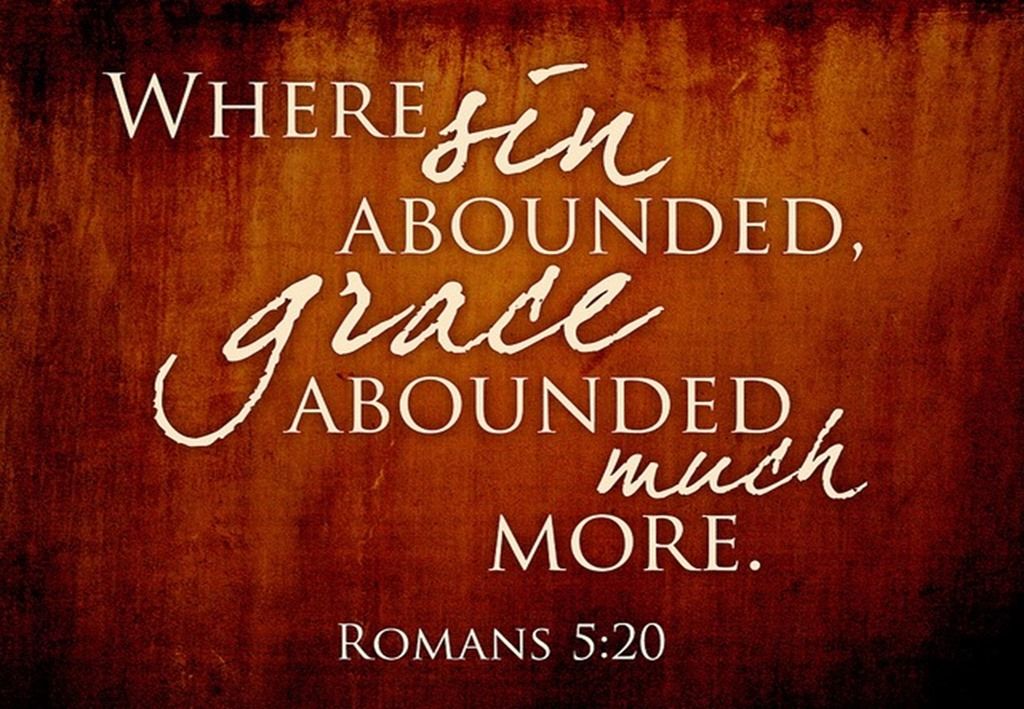
…But where sin abounded, grace did much more abound. — Romans 5:20
I’ll never forget the time we were being attacked on every side by the enemy. It seemed like an all-out assault had been unleashed against us. At the same time we were experiencing this attack on our ministry, the city where we lived was in political upheaval.
This chaotic situation was so terrible that a bomb was detonated just a two-minute walking distance from our apartment! We could feel our building shake as the bomb exploded. It seemed as if each day was bringing new problems to the nation and more threats to our ministry.
All of this was occurring at a time when the Spirit of God had told us to launch out and take a new step of faith. It seemed like such a wrong time to take such a step of faith. Logic said, “Pull back! Protect yourself! Stop everything until the heat is off!”
But the Spirit of God kept telling us, “Dig in deeper! Keep pressing forward! Don’t let up for one minute! This is a perfect opportunity for the Gospel message to be spread even further!”
Right in the middle of all that chaos, we watched as God poured out His grace on us. Although it was a dangerous and difficult time, it was also a glorious moment to be serving in the Kingdom of God! God began to do marvelous new things in the nation where we lived.
In that troublesome hour, people were open and hungry to know more about the things of God. They wanted answers and were willing to listen. As a result, people were saved; spiritual darkness was pushed back in people’s lives; and the Gospel was spread further than ever before!
As God moved mightily in the nation, that very dark, precarious moment became a spiritually bright time as many were led into the Kingdom of God. This simultaneous operation of darkness and grace made me think of Romans 5:20, which says, “…Where sin abounded, grace did much more abound.”
The word “abounded” that Paul uses to describe this abundance of sin comes from the Greek word, pleonadzo, which simply means more. It denotes something that exists in abundance.
The Greek tense describes an abundance that is growing larger and more expansive with the passing of time. The implication is that sin is never stagnant but continually grows, increases, and expands. This means Romans 5:20 could be translated, “Where sin exists in abundance and is multiplying and constantly expanding….”
This describes the growing nature of unrestrained sin. But Paul doesn’t stop there! He goes on to say, “…Where sin abounded, grace did much more abound.”
The words “much more abound” are from the Greek word huperperisseo, which describes something that is growing out of measure, beyond proportion, and out of its banks to a far-stretched extreme. It is like a giant river that is being flooded with waters from upstream.
Those waters are coming downstream so fast that the river can no longer hold the raging current in its banks. Its water rises, rises, and rises until it finally begins pouring out of its banks and begins to flood everything in sight. This is exactly the idea of the word Paul uses when he says, “…Grace did much more abound.”
This means Romans 5:20 could be interpreted: “For wherever sin exists in abundance and is multiplying and constantly expanding, that is precisely the time and place where grace is poured out in a far greater, surpassing quantity.”
Regardless of where we live and what we are facing — regardless of how bad the situation around us looks to our natural eyes — the grace of God is flowing downstream, and God is lavishly pouring it forth in abundant measure!
In fact, it is impossible for us to imagine, measure, or even dream of the amount of divine grace God is sending in our direction. No banks can hold the flood of grace He is sending our way! It isn’t just “a lot” of grace; it is more, more, more, and much more grace!
The flood of grace will always far surpass the flood of sin and darkness! Satan will try to stop you from doing the will of God, but never forget that the enemy cannot prevail against you if you will only yield to the Lord. You will find that God is supplying more than enough grace to match whatever the enemy is trying to do.
If you will surrender to that divine grace, it will rise higher and higher until it eventually floods every area in your life. Instead of seeing the destruction of the enemy, you will see the awesome outpouring of the marvelous grace of God everywhere you look!
So when a situation looks bad, as it did so many years ago when we were living amid troublesome times in our part of the world, don’t be too surprised if you hear God’s Spirit say, “Pour it on! Keep it up! Don’t stop for a minute! Keep pressing ahead!
It is in dark and difficult moments like these that I love to work the most! This is when My grace super-exceeds the darkness of the world. Wherever sin and darkness abound is where I really pour out My grace!” sparking gems from the greek My Prayer for Today Lord, I thank You for pouring out Your grace in difficult, chaotic times.
When sin abounds and darkness tries to reign, that is always when You reach out to seek and to save. Forgive me for giving way to fear and for thinking of retreating at this key moment when You are wanting to make a strategic advance. I choose to push away all my fears and to believe that You are going to do something miraculous to save the day!
Let Your grace flow, Lord — pour it on! Please shine Your light in this hour of darkness! I pray this in Jesus’ name! sparking gems from the greek My Confession for Today I confess that God’s grace is poured out mightily to drive back the forces of darkness during times of difficulty and chaos.
God uses these dark moments as opportunities to pour out His grace and to show others who He is! The world may reel in fear and uncertainty, but God is always near. I declare by faith that God will reveal His power and intervene with His grace to bring the solution for this difficult hour!